
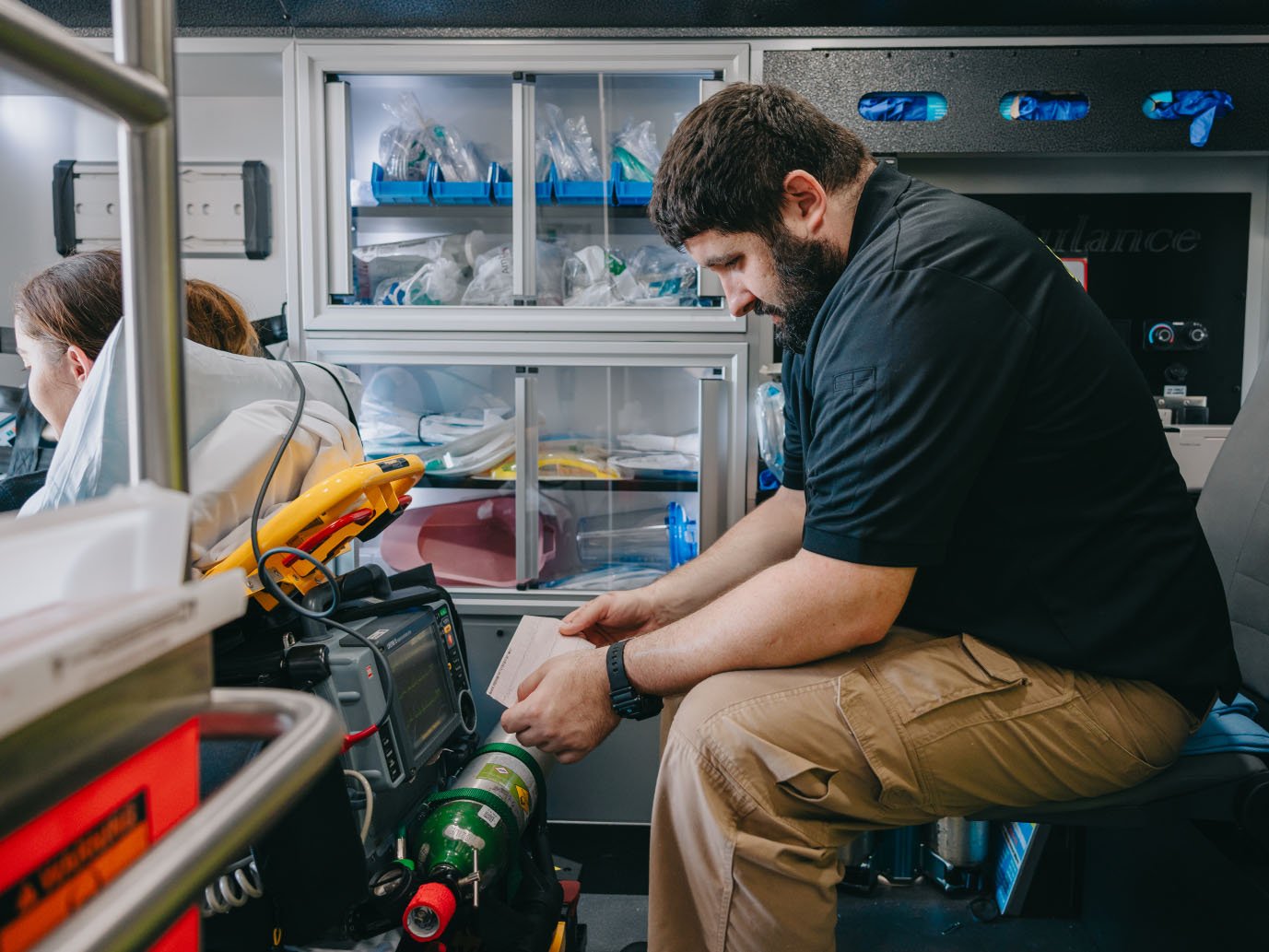
Four separate public acts have reshaped Illinois EMS licensure and operations since August 2025, and most published guidance has not caught up to any of them.
Four separate public acts have changed how EMS works in Illinois since August 2025. One of them rewrote how you get licensed. One of them was written, whether or not anyone intended it, for towns exactly the size of ours.
Most published guidance has not caught up to any of them. Here is what changed, when each takes effect, and which ones actually affect you.
Last reviewed August 2026. Two of these take effect in January 2027 and are described in future tense below.
What is the biggest change for someone getting licensed?
The National Registry exam is now mandatory. Public Act 104-362, effective August 15, 2025.
Illinois law previously said candidates "may elect to" take the National Registry examination instead of a Department exam. The act struck that phrase and replaced it with "shall." There is no longer an alternative and no longer a choice.
If you are reading a guide that describes Illinois as offering a state exam or the National Registry, that guide predates this change. A surprising number of national sites still say it.
What this does not change: passing the Registry exam gets you a certification, not a license. You still convert it into an IDPH license before you can work. We cover that distinction in full here: NREMT Certification vs. Illinois EMT License: Why You Need Both.
Did anything change for rural services?
Yes, and this one is unusually specific. Public Act 104-704, effective July 31, 2026, allows providers serving "a rural or semi-rural population of 10,000 or fewer inhabitants" to staff with volunteers, paid-on-call staff, part-time employees, or any combination.
That threshold describes a great many Illinois communities — including several we serve directly. It is a legislative acknowledgment of something rural EMS has been saying out loud for years: the staffing model that works in a city does not transfer to a town of two thousand, and forcing it produces coverage gaps rather than coverage.
Whether it helps depends entirely on execution. But it is a real loosening of a real constraint, and it is aimed squarely at the kind of contracted 9-1-1 coverage small fire districts depend on.
Is there anything about EMS career pathways?
The same act that made the Registry exam mandatory also created a new section directing IDPH to convene stakeholders on bridge programs — specifically CNA-to-EMS and EMS-to-nursing pathways.
It is a task, not a program. Nothing exists to enroll in yet. But it is the first formal signal that the state is treating EMS as a career with entry and exit ramps rather than a terminal job, and if you are weighing an EMS credential against a nursing one, it is worth knowing the conversation has officially started.
If you are looking at pathways that exist right now instead: EMT and Paramedic Programs in Central Illinois (coming soon).
What is changing with the license itself?
Two things, both effective January 1, 2027, under Public Act 104-610.
IDPH will be able to issue a digital license — a secure electronic record that Resource Hospitals and vehicle service providers can verify — as an alternative to a physical card.
And more practically: licensees will not be required to carry a copy of a physical or digital license on their person while on duty. If you have ever turned a vehicle around over a card left in another jacket, that one is for you.
Anything affecting patient care directly?
Public Act 104-696, effective January 1, 2027, removes a precondition on transport to an approved mental health facility. Previously the statute required that a person not be under the influence of drugs or alcohol to be transported there. That requirement is being removed.
In the field this addresses a genuinely bad situation — a person in crisis who has also been drinking is still a person in crisis, and the previous language forced a distinction that did not serve them.
Is there any fee relief?
Yes, and it is underused. Illinois waives licensure, renewal and examination fees for members of the Illinois National Guard, Illinois State Police, and volunteers serving units of local government or not-for-profits in communities under 5,000 people.
A lot of small-town Illinois qualifies. The catch is timing: the waiver has to be approved before you sit the exam or apply for licensure. There are no refunds afterward, so it is worth handling early rather than discovering it after the fact.
What should I actually do about any of this?
If you are getting licensed: plan for the Registry exam, and disregard anything telling you there is a state alternative.
If you are renewing: nothing here changes your four-year cycle or your continuing education hours.
If you volunteer in a small community: check the fee waiver before your next exam or renewal.
And if you read something about Illinois EMS licensure that carries no date, treat it as suspect. Four acts in twelve months is an unusual amount of movement, and a lot of otherwise reasonable pages went stale without anyone noticing.
Related reading
- NREMT Certification vs. Illinois EMT License: Why You Need Both — what the mandatory exam actually earns you, and what it does not.
- EMT and Paramedic Programs in Central Illinois (coming soon) — where to train, now that the exam question is settled.
Working in Illinois EMS, or thinking about it?
Stark County Ambulance runs eight stations across five Illinois counties — contracted 9-1-1 response for six fire districts, plus interfacility transport across the Illinois Valley, the Peoria area and Champaign–Urbana.
Several of the communities we cover are exactly the size the new rural staffing rule was written for. We hire IDPH-licensed EMTs and paramedics across all eight stations and pay for continuing education.