
Paramedic-Staffed Advanced Life Support Ambulance Service
ALS units with advanced airway management, cardiac monitoring, IV therapy, and full pre-hospital medications, the level of care between BLS and critical care transport.

What Advanced Life Support Actually Means
An ALS unit isn't an ambulance with more equipment, it's a paramedic-staffed team licensed and trained to deliver pre-hospital critical care. It sits between BLS, for stable non-emergency transports, and critical care, for ICU-level acuity. For most 911 calls and many transfers, ALS is the correct match.


When ALS Is the Right Level of Care
Advanced life support is the right call when a patient needs monitoring, medication, or intervention that cannot safely wait until they reach the hospital.
Cardiac Conditions or Chest Pain
Respiratory Distress
Altered Mental Status
Serious Infections or Sepsis
Traumatic Injuries
Ongoing IV Medication Therapy
Unstable Vital Signs

How ALS Transport Works
Dispatch & Care Planning
Our coordinator confirms acuity and clinical needs, and assigns ALS when that's the correct level of care.
Paramedic-Led Response
A licensed paramedic leads every ALS unit, with the full complement of advanced equipment and medications aboard.
On-Scene & Transport Care
Assessment, treatment, and continuous monitoring. Advanced interventions start before the truck moves.
Hospital Communication & Handoff
Early notification to the receiving facility, a complete bedside report, and documentation that closes the loop.
Core Clinical Capabilities on Every ALS Unit
Six capabilities that separate an ALS unit from a transport van with a stretcher in it.
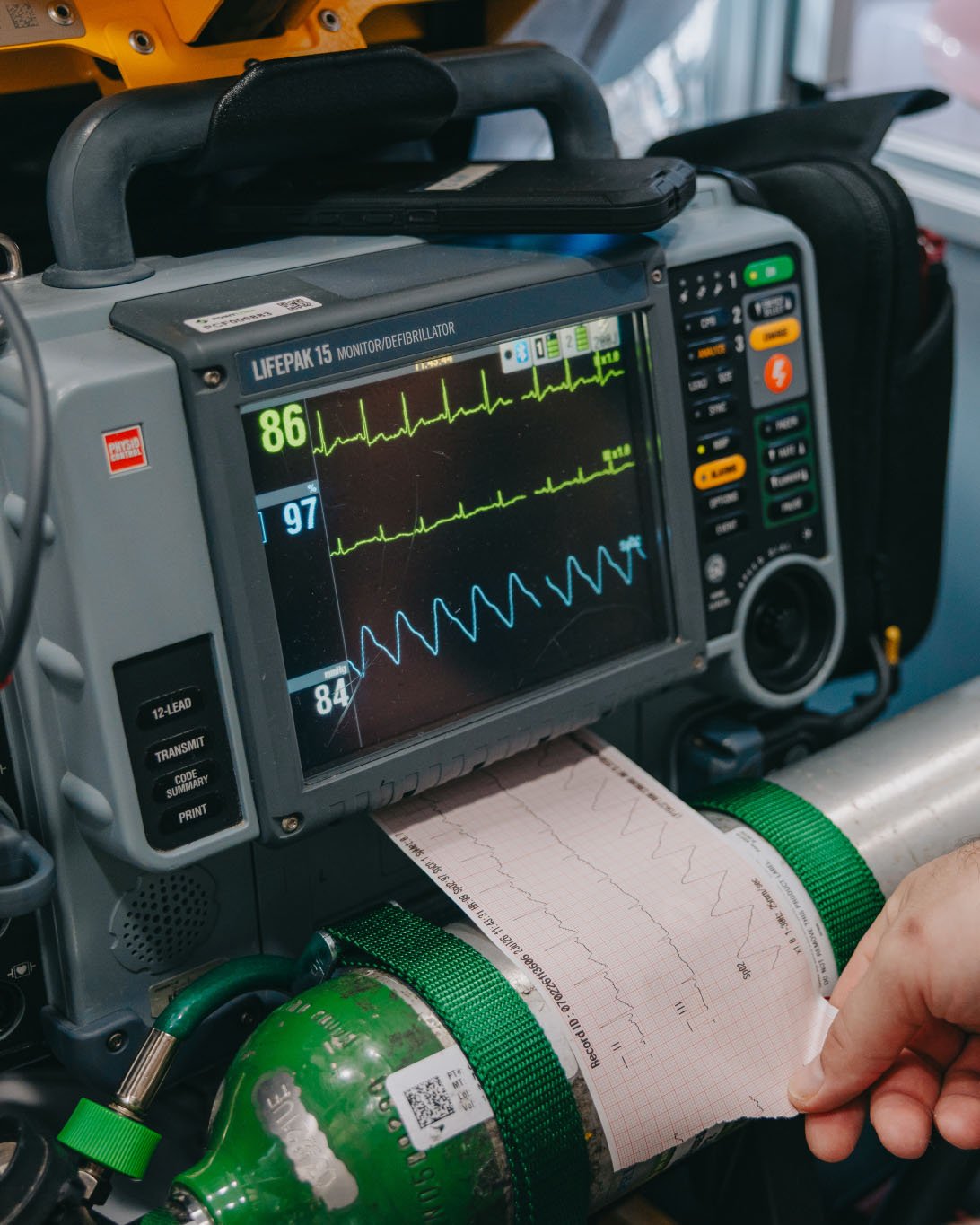
Advanced Cardiac Life Support (ACLS)
Cardiac arrest management, arrhythmia interpretation, and rhythm-specific interventions.

Pharmacological Interventions
Full pre-hospital medication library: pain, cardiac, respiratory, diabetic emergencies, under standing medical director orders.
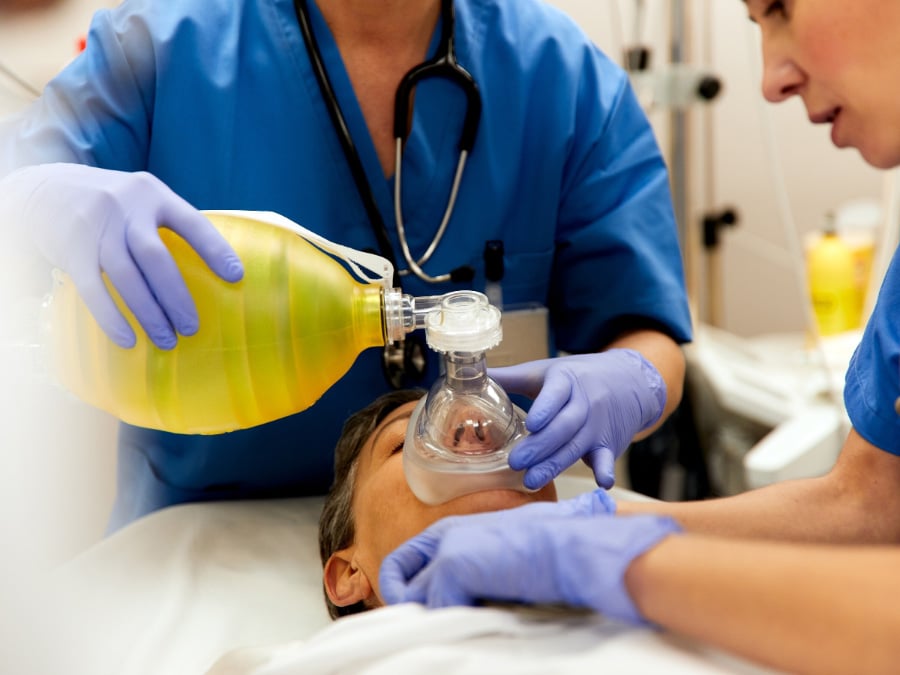
Advanced Airway Management
Endotracheal intubation, supraglottic airways, and rapid-sequence protocols where authorized.

IV & IO Access
Peripheral and intraosseous access for fluid resuscitation and medication delivery when a line has to be established fast.

12-Lead ECG & Manual Defibrillation
Field 12-lead acquisition and interpretation with early notification to the receiving cardiac center.

Continuous Monitoring & Documentation
Vitals, capnography, and cardiac rhythm tracked and recorded from first contact through hospital handoff.

Advanced Care, Backed by Real Call Volume
Stark County Ambulance staffs advanced life support the way it should be staffed, every unit, every shift. Real call volume across eight stations, standing medical direction, and crews who use these skills daily rather than annually.
Supporting Care Beyond Advanced Life Support

Emergency Response (911)
Rapid-response emergency medical services in partnership with local fire departments and dispatch agencies.
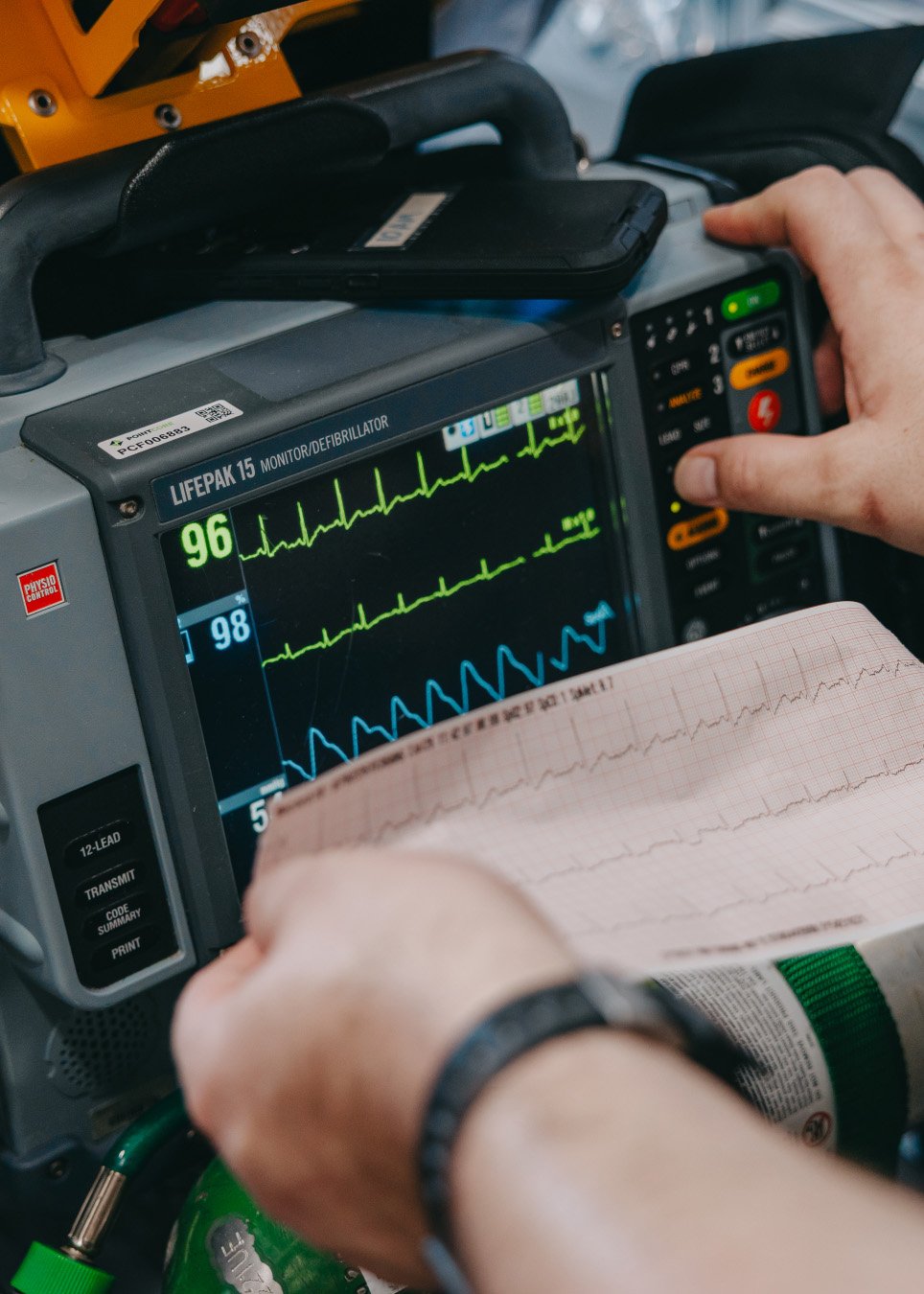
Critical Care Transport (CCT)
Advanced interfacility transport for high-acuity patients requiring intensive monitoring and treatment.

Basic Life Support (BLS)
Safe, professional medical transport for stable patients and scheduled care needs.
Need an Advanced Life Support Transport?
Contact Stark County Ambulance to arrange ALS transport when paramedic-level care is required.