
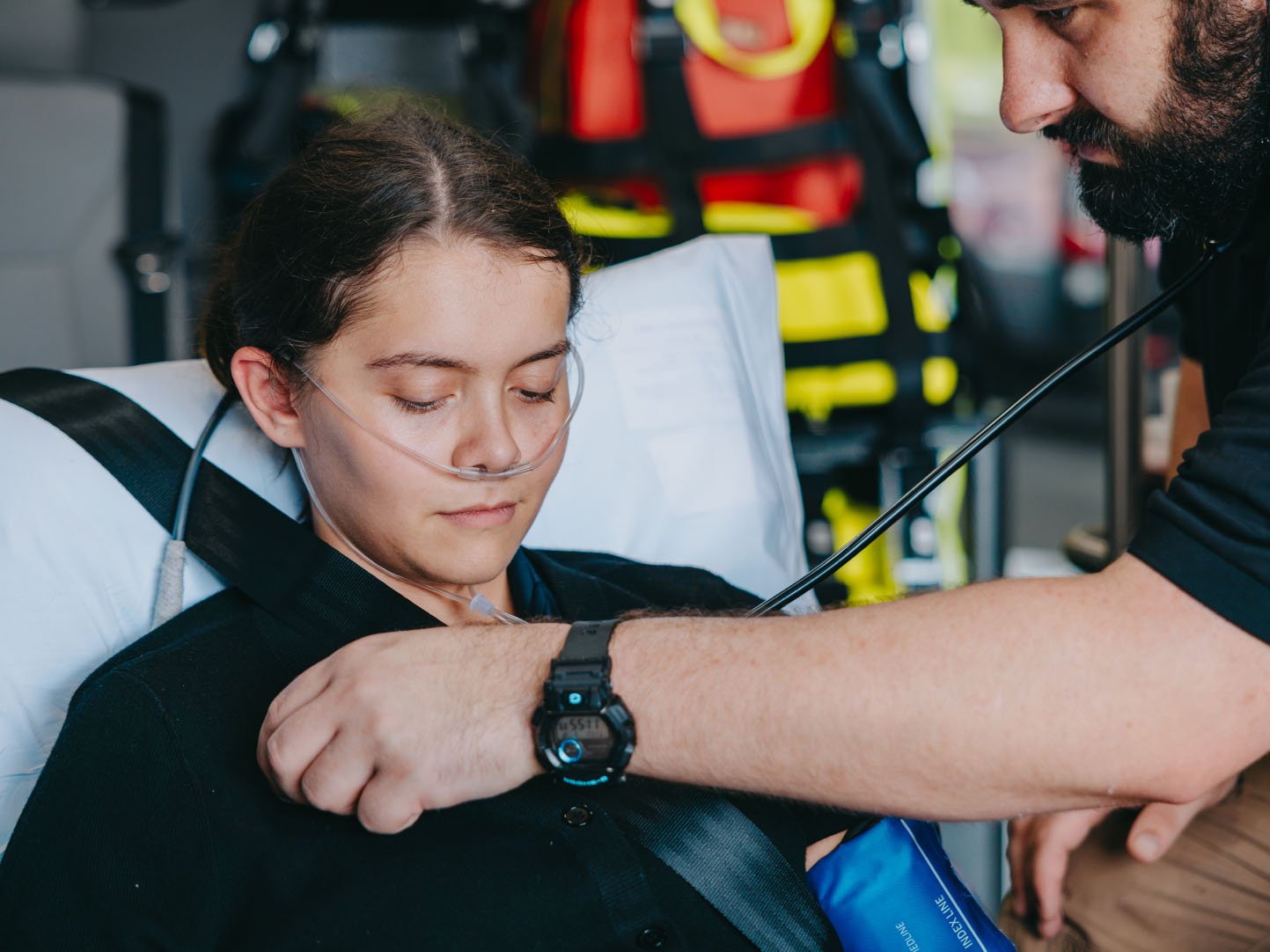
Being told a relative is being moved to another hospital raises a dozen practical questions, and the people telling you are usually mid-shift and moving fast.
Somebody — a nurse, a case manager, a doctor between rooms — has just told you your relative is being moved to another hospital. They said it in about nine seconds and then they had to go.
You probably have a dozen questions and no obvious person to ask. Here are the answers to the ones people ask us most.
Why is my family member being moved at all?
Almost always because the receiving hospital has something the sending one does not — a specialty service, a particular kind of bed, a procedure, a physician in a specific field.
It is not usually a sign that things have got worse. A transfer is frequently the opposite: it means someone has decided a specific level of care is worth arranging, and arranged it.
If nobody has explained the reason and you want to understand it, the sending physician or the case manager is the right person to ask. That is a reasonable question and they are used to it.
Who decides how the patient travels?
The sending physician, in consultation with the receiving one. They decide whether the patient needs a basic transport, an advanced one with a paramedic, or a critical care transport with additional clinical staff.
That decision is based on what the patient needs during the trip, not just how sick they are. Someone stable but on a ventilator that may need adjusting travels differently from someone who is more acutely unwell but needs nothing done en route.
The ambulance service does not make that call. We staff and equip to it.
How long will it take?
Longer than you expect, and most of it happens before the ambulance moves.
The receiving hospital has to accept the patient and have a bed ready. Paperwork and orders have to be completed. The crew has to arrive, get a full handoff, and package the patient safely — which for anyone with lines, drips or an airway is genuinely careful work, not a lift onto a stretcher.
The drive itself is often the shortest part. A transfer that takes three hours end to end might involve forty minutes of driving.
If you are waiting and nothing seems to be happening, that is usually what is happening.
Can I ride along?
Sometimes, and it depends on the patient's condition, the level of transport and the crew's assessment on the day. Space in the back is limited and it is a working clinical environment.
Ask the crew directly when they arrive rather than assuming either way. If the answer is no, it is about room and safety, not about you.
Most families follow by car, which is generally the better plan anyway — you arrive with a vehicle, which matters more than people anticipate at the other end.
Where should I go, and when?
Get the receiving hospital's name, address, and the department or unit the patient is going to. Ask the sending staff for it and write it down — large hospitals have several entrances and the right one is rarely obvious.
Do not try to leave at the same time as the ambulance. You will not arrive together, and driving to keep up with an ambulance is genuinely dangerous. Leave when you are ready, drive normally, and expect to wait a little at the other end while your relative is settled and assessed.
What should I bring?
Photo ID and insurance cards. A current medication list, if you have one. Contact numbers for other family. A phone charger — emergency departments and waiting rooms are places where phones die.
Leave valuables at home or take them with you rather than sending them in the ambulance. Personal belongings do travel, but a transfer involves several handoffs and small items are the ones that go astray.
If your relative wears glasses, hearing aids or dentures, mention them specifically to the crew. Those are the three things most often left behind, and their absence makes the first hours at a new hospital much harder than they need to be.
Who are the people in the ambulance?
Illinois-licensed EMTs and paramedics, and for critical care transports, additional clinical staff.
They will introduce themselves, confirm your relative's identity and condition with the sending nurse, and do a full handoff before moving. If you are there, they will usually tell you where they are going and roughly how long it will take.
You are allowed to ask them questions. Crews would generally rather answer two questions at the door than leave a family in the dark. We wrote about how a call actually runs here: Inside the Toulon Station (coming soon).
Is there paperwork I need to handle?
For a non-emergency transfer there may be a Physician Certification Statement, but that is completed by the facility or the physician's office, not by you.
You may be asked to confirm insurance details or sign an acknowledgment. If you are unsure what you are signing, it is entirely reasonable to ask someone to explain it before you do. What a Physician Certification Statement Is, and When You Need One covers that form in detail if you want to understand it.
Will there be a bill?
Usually, yes — ambulance transport is billed separately from the hospital stay, which surprises a lot of families who assumed it was included.
What you personally owe depends on your insurance, the level of transport and the circumstances, and it is not something anyone can tell you accurately in the moment. If a bill arrives and you do not understand it, call the number on it and ask someone to walk you through it. That is a normal request and it gets a real answer.
What if I just want to know what is happening?
Call the receiving hospital once your relative has arrived and been settled — they will have the current picture. During the transport itself, the sending unit is usually the better contact.
And if you are standing there while a crew is loading, it is fine to ask which hospital, which entrance, and roughly how long. Nobody minds.
Related reading
- What a Physician Certification Statement Is, and When You Need One — the form behind non-emergency transfers, and who fills it in.
- Inside the Toulon Station (coming soon) — what actually happens between a call coming in and a crew arriving.
Questions about a transport?
Stark County Ambulance runs eight stations across five Illinois counties, moving patients between facilities across the Illinois Valley, the Peoria area and Champaign–Urbana every day. Our dispatch answers 24/7.
If you have a question about a transfer involving a family member, get in touch — someone will actually talk to you.